Showing posts with label pågan. Show all posts


Sea Grant Guahan

John Borja takes us around a dreamy volcanic island.
DISCLAIMER: There are no monkeys on Pågan.


informative, with cheesy music!


ON MILITARIZATION OF PAGAN

Northern Islanders Consider Class Action Lawsuit
Friday, March 28, 2014
Saipantribune.com


Former residents of the Northern Islands and those who have ties to the area are threatening to file a class action lawsuit against the U.S. military if the planned militarization of Pagan pushes through.

This consensus was made following a two-hour town hall meeting Wednesday night at the Carolinian Utt in Garapan where those who attended also said they feel neglected.

“We are mostly looking at getting the focus together and pushing the interest they [Northern Islands] have for islands in the north. Because nothing is being done for the folks of the Northern Islands,” said Jerome Aldan of the Northern Islands Mayor’s Office.

He pointed out that Commonwealth laws also apply to the Northern Islands because they are part of the CNMI, yet “it seems like they treat the Northern Islands differently and are excluded from all these privileges…privileges like homesteads.”

“For many years the Northern Island folks are lost. They don’t know what is going on and how to get their lands back prior to being exiled here to Saipan after the volcanic eruption,” Aldan added.

The Northern Islands Mayor’s Office earlier said that in the past 20 years alone, 18 applications for land for agricultural homestead for the Northern Islands have remained pending with the Department of Public Lands.

Aldan said that a census conducted in 1969 showed that Pagan was home to 49 residents. The oldest resident was born in 1903 while the youngest was born in 1968.

Saipan and Northern Islands Municipal Council adviser William Torres, who also made a presentation at the meeting, said that just recently the House of Representatives passed House Bill 18-108 to force DPL to issue homesteads to residents of the Northern Islands.

Northern Islanders Lino Olopai, Cecilia Kaipat Selepeo, Moses Castro, and others also expressed concerns about the future of Pagan.

Castro said that he was born in the Northern Island on Sept. 19, 1942. “I got married there and had three kids, but after the volcano erupted we were sent here,” he said.

Olopai said the government seems to be waiting for a bigger investor to develop the Northern Islands. He also highlighted the clash between Western concept of ownership and the indigenous rights to their property.

“Like this slipper [that I’m wearing], do I need legal documents just to own this slipper? Do I need a lawyer to go through court to own this? Olopai said in Chamorro. “Why not the traditional way? This slipper will get passed on to my children, then it’ll pass on to their children, then generations to come. That’s the traditional way, our property needs to continue to get passed through the generation with no documents,” he added.

Selepeo told Saipan Tribune about her late father, Francisco Borja Kaipat, the first district representative of the Northern Islands who was assassinated in April 1972.

“The following day we had no choice but to come to Saipan from [Pagan]. My mother was shot in the head. My brother who was 11 years old at that time was shot in the shoulder but he had to be brought to Guam,” she said. “But also because our mother was disabled, we had no choice but to stay here.”

She was born in Pagan in 1970 and has longed to go back to her birth island. Last year on August 2013, she finally managed to join a trip going to Pagan.

“To finally reach the place 42 years later brought back a lot of memories. That’s why when I came back to Saipan after the trip I felt that I needed to get a property up there,” she said.

Now that she is in her 40s she is willing to go back to Pagan, which she described as a healing place.

Aldan said that it is sad to see that nobody is entertaining their concerns.

“It’s all a mater of justice to these folks, they’ve waited so many years. Some of our ancestors, elders, and some folks of the listed census for the Northern Islands are probably gone as we speak right now,” he said.

“Despite where you are in the Northern Islands, we are still in the CNMI,” he added.


http://www.saipantribune.com/newsstory.aspx?newsID=154608&cat=1 


Pågan Island featured on Talk Nation Radio


Michael Hadfield is a Professor of Zoology and Principal Investigator at the Kewalo Marine Laboratory, University of Hawaii, and at the Pacific Biosciences Research Center. He discusses the need to save Pagan Island, its people and other species, from the U.S. military. See http://savepaganisland.org


Total run time: 29:00
Host: David Swanson.
Producer: David Swanson.
Music by Duke Ellington.
Download from Archive or LetsTryDemocracy.
Pacifica stations can also download from AudioPort.
Syndicated by Pacifica Network.


http://davidswanson.org/node/4322 


Lawmakers Oppose Pågan Militarization

CNMI, Guam Governors Meet With US Pacific Command in Hawaii

House Speaker Joseph Deleon Guerrero (Ind-Saipan) and other House members are pre-filing today a joint resolution asking Gov. Eloy S. Inos—who is set to meet with the U.S. Pacific Command in Hawaii—to “oppose any and all proposed military use of Pagan and oppose any increased military activities in the Northern Islands.” It is set to become the CNMI Legislature’s unified voice against the militarization of Pagan.

Inos left for Hawaii yesterday, a day later than originally scheduled.

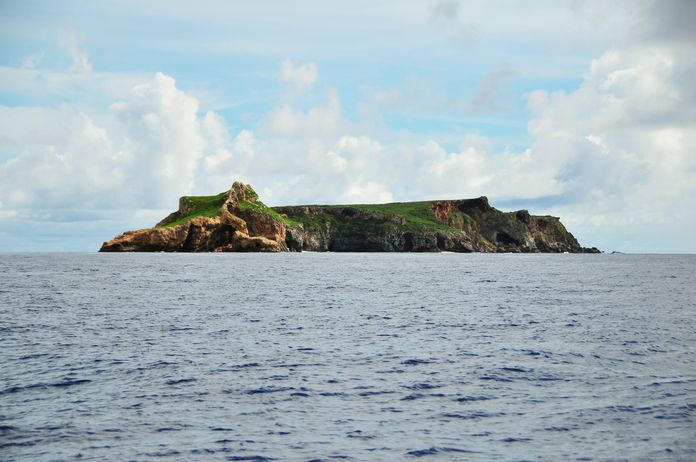
Pagan Island (image above) is made up of two volcanoes connected by a narrow isthmus of land.
The U.S. Pacific Command invited Inos and Guam Gov. Eddie Calvo to Hawaii for a briefing about military plans in the region. Accompanying Inos are press secretary Angel Demapan and counsel Wesley Bogdan.

Lawmakers described the proposed Pagan use as “basically a military war game plan that demands continuous use and occupation of the entire island of Pagan for warfare functional areas.”

They said these are not limited to amphibious warfare, anti-submarine warfare, mini warfare, strike warfare, air warfare, surface warfare, electronic warfare, and naval special warfare, among others.

“The CNMI has legitimate concerns that certain proposed military operations on Pagan will adversely affect the socio-economic and other cultural concerns, including but not limited to geo-tourism, geothermal power generation, and planned resettlement,” the nine-page draft joint resolution partly reads.
Marianas Honeyeater on Pagan Island [savepaganisland.org]
The pre-filing also comes days after the lawmakers’ meeting with the Marianas Forces Pacific led by executive director Craig Whelden about changes made to the proposed alternatives related to the use of Tinian and Pagan for live-fire training.

A few days later, lawmakers also met with visiting Federal Aviation Administration officials.

The House of Representatives has tentatively set a Friday session, wherein the joint resolution is expected to be adopted and sent to the CNMI Senate.

This also comes days after the governor said he will not support artillery ranges on Pagan and Tinian for safety reasons, adding that Pagan alone is an “uphill battle.” It was the governor’s strongest statement to date on the military plans for both islands.

Rep. George Camacho (R-Saipan), one of the co-sponsors, said yesterday “there needs to be proper planning and a balance between development and preservation of our valuable resources.”

“Pagan and all the Northern Islands are the few resources that we have for our people. It is in the best interest that we protect those islands for our children and people,” he told Saipan Tribune.

Once adopted by the CNMI Legislature, copies of the joint resolution will be transmitted to the offices of President Barack Obama, the CNMI governor, members of the U.S. Congress including Delegate Gregorio Kilili C. Sablan (Ind-MP), and the mayors of Rota, Tinian and Aguigan, Saipan, and the islands north of Saipan.

Rep. Ray Tebuteb (Ind-Saipan), also a co-sponsor and chairman of the Saipan and Northern Islands Legislative Delegation, said yesterday he’s been opposed to the militarization of Pagan since the onset.

“I opposed it back then and I still oppose it today for safety and environmental concerns, among other things,” Tebuteb said.

National Defense

The speaker and co-sponsors said in the draft resolution that the CNMI already contributes to the national defense by being a valuable strategic military defense asset in the Pacific region and by leasing its scarce real property, including but not limited to, over two-thirds of Tinian, valued real property in Tanapag, and Farallon de Medinilla for military training, maneuvers and live-fire bombings.

Aircraft dropping Mark 82 227 kg high-drag bombs over Farallon de Medinilla Island, Marianas Islands, during exercise.
[savepaganisland.org]
Given the significant land, ocean, and airspace that the military has already taken into custody and control for national defense, the 18th CNMI Legislature “opposes the military’s proposed Pagan plan for combined-unit live fire trainings and maneuvers.”

Lawmakers said the wholesale militarization proposed for Pagan will permanently enjoin any meaningful opportunity for resettlement and sustainable community-building redevelopment.

They said Pagan’s planned militarization is incompatible with the Pagan Island Eco-Tourism Master Plan in the Marianas Visitors Authority’s five-year master plan, and the Northern Marianas College’s agricultural master plan.

The House Natural Resources Committee, meanwhile, is recommending passage of a bill that would help pave the way for Pagan homesteading.

Geothermal, Pozzolan

Eifuku Champagne Vent emitting bubbles of liquid carbon dioxide.
U.S. Geological Survey / public domain.
Lawmakers said Pagan’s proposed military use would adversely affect the 50- to 120-megawatt geothermal reservoir that exists on Pagan “which could support the near-term development and resettlement” of the island.

They said geothermal energy from Pagan could be transported to Saipan via submarine cable. They said as a hydrogen economy develops, the CNMI could also become an energy exporter that would no longer be dependent on expensive imported fossil fuels.

House members added that the proposed military use of Pagan would threaten any efforts to use the pozzolan deposits on Pagan, estimated at 200 million metric tons.

‘Untold Destruction’

Lawmakers said Pagan’s militarization will result in untold destruction, contamination, pollution, and harm to the health and wellbeing of the people in the Marianas archipelago.

They said these include mass destruction of cultural resources, critical habitats, and life webs in the Marianas chain “which can never be undone.”

They also spoke of local, regional, national, and international advocates that have publicly rallied against the “impending occupation, destruction and contamination of Pagan by military live firings and training activities.” These include Save Pagan Island, Sierra Club, Roots Action and Care2 Make a Difference.

24 Cents per SQM of FDM

Farallon de Medinilla [US Navy]
A 1971 Use and Occupancy Agreement was executed by the U.S. and Trust Territory governments for annual rent of $20,600.

This has provided the U.S. military, up until the present time, unimpeded access, occupancy and unrestricted use of 83,000 square meters of FDM for live firing and bombing.

Lawmakers said this amounts to about “24 cents per square meter.”

They said over 40 years later, scarce CNMI land is once again being eyed for manned and unmanned military live firing, bombing and related military training and maneuvers by land, sea and air that extends far beyond FDM.

3 Times the Size of California

The speaker and co-sponsors also said the proposed Pagan military roadmap covers not just the entire island of Pagan but also its coastlines and surrounding waters and exclusive airspace, including airspace restrictions extending to Anatahan, Sarigan and as far up north as Pajaros.

The lawmakers said the proposed Department of Defense Mariana Island Range Complex is equivalent to three times the size of the state of California and retains 70,000 nautical miles of airspace for training, equivalent to the size of the state of Washington.
Mariana Islands Training & Testing Study Area

They said when the Record of Decision on the public scoping held in 2013 for the Mariana Islands Training and Testing environmental impact statement is finalized and implemented, the MITT will “nearly double” the ocean space that has been already taken and controlled by the military—from 501,873 nautical miles to 984,469 square nautical miles.

This makes the occupation and use by the military training range in the Mariana archipelago equal to the combined sizes of the states of Washington, Oregon, California, Idaho, Nevada, Arizona, Montana and New Mexico, they said.

FDM

The lawmakers said under the MIRC/MITT strategic proposal, the Department of Defense would engage in higher frequency military trainings involving a greater tonnage of live fire bombardment over FDM, a greater tonnage of underwater mines detonated, and the use of sonar weaponry. Collectively, these may result in the permanent hearing loss of up to 59 whales and dolphins per year, they said.

Farallon de Medinilla [http://yanai.exblog.jp/i2/]
They said it will also accelerate erosion and the sedimentation of FDM’s surrounding reef causing physical damage to marine life added by underwater demolition. It will significantly increase contamination of surrounding waters from both exploded bomb residue and unexplored ordinance, lawmakers said.

“The CNMI Legislature, for the sake of not just the Northern Islands but also the longterm welfare of the entire CNMI, hereby respectfully requests that the Honorable Governor Eloy S. Inos take all necessary measures to oppose the proposed military exercises on Pagan and also oppose the increased military exercises within the Northern Islands,” lawmakers said.

Taking Too Much from CNMI

Besides the military, environmental activities have also taken away the CNMI’s control of the Northern Islands, they said. They cited the Marianas Trench Marine National Monument, which gave the federal government control over an estimated 100,000 square miles of the entire Northern Marianas, or about a third of the CNMI.

“Taking into account the federally owned and controlled submerged lands, the military-used and federally leased lands, and all environmental lands that are set aside as preserves, the Commonwealth actually controls only a fraction of the area of the CNMI,” the lawmakers said.

Besides the Pagan militarization, lawmakers said the CNMI Legislature is also concerned with the current CNMI Joint Military Training plan, which proposes to place an artillery range on Tinian “that is vehemently opposed by the people of Tinian.”

“Governor Eloy Inos must ensure that our islands, especially, Pagan, are here for future generations by opposing the militarization of Pagan and the increased militarization of the Northern Islands so as to preserve them for social and economic benefit of the people of the CNMI,” the lawmakers said.


Some of Pagan Island’s biological diversity. [savepaganisland.org]

Gåni: Pågan Island


Inos, Calvo Meet with US Pacific Command in Hawai'i
‘No to Artillery Ranges’
Saipantribune.com   
In his strongest statement to date on the U.S. military’s proposed live-fire training ranges on Pagan and Tinian, Gov. Eloy S. Inos said yesterday he will not support artillery ranges on both islands for safety reasons and pointed out that Pagan alone is an “uphill battle.”

Tinian Mayor Ramon Dela Cruz and House Speaker Joseph Deleon Guerrero (Ind-Saipan) separately welcomed the governor’s public statement, hoping it will galvanize the CNMI’s position on simultaneous military plans on the islands.

“It’s going to be a totally different Tinian,” Inos said, if artillery ranges are allowed on the island, two-thirds of which is already under lease to the U.S. Department of Defense.

The governor is expected to bring the CNMI’s message to Hawaii where he and Guam Gov. Eddie B. Calvo will meet with the U.S. Pacific Command. He said he is set to leave this Sunday.

Inos’ statement comes on the heels of his meeting this week with visiting Federal Aviation Administration officials and his administration’s meeting with Marianas Forces Pacific officials last week.

The governor said it was never envisioned that Tinian will host artillery, what he described as “big guns.” He said live-fire training ranges using “small arms” was initially planned and that’s something that’s acceptable.

Inos was referring to a 2010 Record of Decision for the Guam and CNMI military buildup’s final environmental impact statement, wherein four live-fire training ranges will be built on Tinian: a platoon battle course, an automated combat pistol/military police firearms qualification course, rifle known distance range, and a field firing range.
Tåga Latte site, Tinian.

“Tinian is currently under discussion and it’s really the intensity, how large the artillery or ammos that will be involved in there. It was never envisioned to have anything bigger than 50-mm or whatever that is. But since the shift in the Guam firing range up to Tinian, there’s been talk about moving the scale up on Tinian. That’s going to be a major concern because it’s not going to be the same Tinian once you start bringing in those big guns,” the governor said.

He emphasized that having military training on Tinian “300 days a year, 24/7” will have its negative impacts.

“It’s going to be a totally different Tinian,” Inos said in an interview at the signing of three local laws and one public law yesterday afternoon on Capital Hill.

‘On Same Page’

The Tinian mayor, in a phone interview last night, said the governor’s statement is “welcome news” that he said will strengthen the resolve to oppose artillery ranges on both Tinian and Pagan.

“I’m very glad we’re all now on the same page. I appreciate very much the governor’s stand,” Dela Cruz said.

While the Tinian mayor initially supported more military activities on Tinian, he had a dramatic change of heart when he visited artillery ranges in Hawaii that were the similar to the ones being proposed for Tinian.

“Like I said before, there is no way the people of Tinian will accept an artillery range or mortar range on the island. That is just too much. And like I said I can’t speak for the people of Pagan but I’m sure they won’t want the same thing on their island,” Dela Cruz said.

The House speaker, who has been drafting a resolution requesting the governor to take a strong stand against the militarization of Pagan, among other things, also welcomed Inos’ statement yesterday.

‘No Way’

During a public scoping last year, MARFOPAC said the largest artillery that could be used on Tinian is 155 millimeters, and several kinds of mortars.
  Saipan & Tinian. [NASA/US Geological Survey]

“Of course, I’m not going to support any kind of activity like that,” Inos said. “Some live-fire training and so forth, maybe, that’s part of what was envisioned initially and so that’s something that we would support. But to have something bigger, we need to do more study to ensure there is no disruption in civil aeronautics, and so forth. What about the private, commercial aircraft and so forth? Those are the things that we need to look into on Tinian.”

Pagan, he said, is an “uphill battle” at this point.

“It’s a very contentious issue,” Inos added.

The governor said because the military “couldn’t do certain things in Guam” such as the need to use “bigger guns,” they are going to Tinian.

“And then for the things they can’t do on Tinian, they are going to have to do it on Pagan. We’re saying ‘no.’ You do on Tinian what was originally agreed and envisioned and that is some live-fire training exercises,” he said.

The governor added that what is being envisioned for Pagan is “more intense” than the bombings on Farallon de Mendinilla.

“What I understand is that if something were to happen in Pagan, it’s big deal,” he added.

The U.S. military plans to develop live-fire ranges and training areas on Tinian and Pagan, as the U.S. looks to rebalance forces in the Pacific. Military studies have identified a large number of joint training deficiencies in the Western Pacific and these two islands are eyed to address these deficiencies.

The proposal includes three unit-level training alternatives for Tinian and two combined-level training alternatives for Pagan.

Changes, Updates

Meanwhile, Inos and Calvo’s Hawaii trip comes days after a team from the Marine Forces Pacific led by executive director Craig Whelden out of Honolulu briefed the Inos administration and the Legislature about the changes that the U.S. military has made to the proposed alternatives related to the use of Tinian and Pagan for live-fire training.

Lt. Gov. Jude U. Hofschneider said the Inos administration welcomes MARFOPAC’s decision to provide the CNMI with a quarterly update related to the development of an environmental impact statement for the Tinian and Pagan proposals.

MARFOPAC deputy director William S. Febuary and operations officer Tim Roberts, among others, briefed administration and lawmakers last week about the changes made to the proposed alternatives, taking into consideration comments and suggestions from CNMI officials and from scoping meetings as well as further technical work.

Hofschneider added that taking into consideration the CNMI’s concerns is welcome news, referring to issues such as access to different areas on Tinian and Pagan, landfill and economic activities.

In response to lawmakers’ questions last week, Roberts said the goal is to allow civil or commercial aviation in and out of Tinian at the same time the military is conducting live-fire training, among other things.

atomic bomb pit at Tinian.
VIDEO: Gov. Inos Says He Won't Support Artillery Ranges on Pagan or Tinian, for Safety Reasons

 
Saipan -  CNMI Gov. Eloy S. Inos is opposing the Department of Defense’s plan to set up live-fire training ranges on Pagan and Tinian for safety reasons and urged the U.S. military to stick to the original plan to use “small arms” for training on the latter.

The governor told Saipan Tribune that it was never envisioned that Tinian will host artillery, which he described as “big guns.” He said live-fire training ranges using “small arms” were initially planned on Tinian and that’s something that’s acceptable to the CNMI.

Inos also emphasized that having military training on Tinian “300 days a year, 24/7” will have its negative impacts.

He, however, conceded that keeping DoD from setting up live-fire ranges for artillery on Pagan is an uphill battle.

The governor said what the U.S. military is envisioning for Pagan is “more intense” than the bombings on Farallon de Mendinilla.